
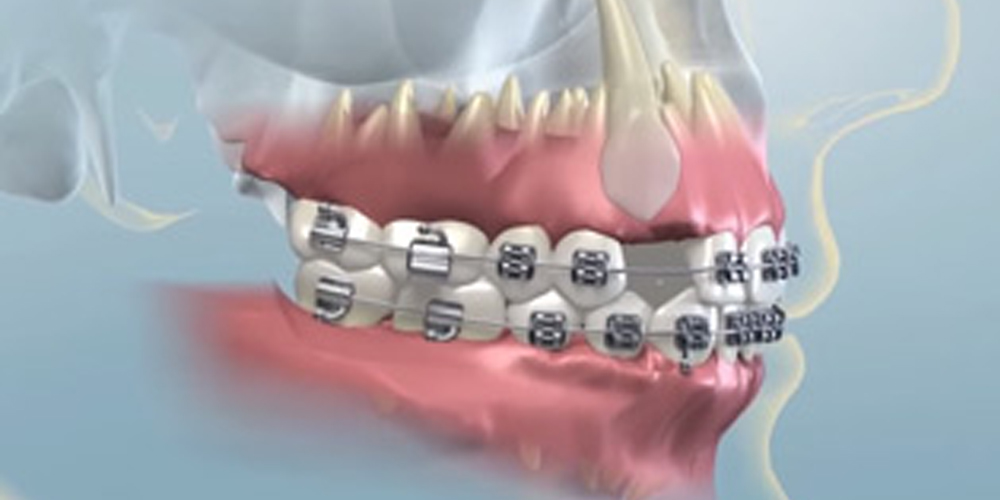
The canine teeth, also called the maxillary cuspids are typically the last front teeth to erupt in the mouth, usually around age 13. As with wisdom teeth, there is often not enough space for them to erupt, causing them to become impacted. However, unlike wisdom teeth, the canines are far too essential to good aesthetics and function in the mouth to simply extract – instead, we must “coax” them into position.Your canines are vitally important to your smile and your bite:
Aesthetics:
The canine teeth are the cornerstones of the arch. Without them, the smile sinks and the lips look thinner.
Function:
The canines are extremely strong and have the longest roots of any teeth. Without them, other teeth in the mouth are forced to work unusually hard, causing damage over time.
Children should be screened by a Peadodontist /orthodontist first at age 7 to monitor the development of teeth by checking in early, you may be able to avoid extensive oral surgery down the road. If it seems likely that the canines are going to become impacted, removing milk teeth in the area to ensure adequate space for canine development may be possible.
As you can see here, the treatment for impacted teeth gets more complicated as time goes on:
11-12 year olds:
At this stage, we are able to preemptively make space for the canines, ensuring a good chance for successful eruption.
13-14 year olds:
Even if we clear space for the canines, they will likely need to be “pulled down” into place with braces.
15 years +:
As time goes on, the impacted tooth will fuse into position and the only remedy will be extraction and restoration.
Complications
Complications of untreated impacted teeth include the loss of neighboring tooth roots and cystic lesions.
Impacted Canine Surgery in Abu Dhabi
The surgery to expose impacted canines takes just about 45 minutes. It is a comfortable procedure that is done under local anesthesia in most instances. Occasionaly general anesthesia may be needed . Mild swelling and soreness may occur for several days following, and can be managed adequately with over the counter pain medicines. During the surgery, the crown of the tooth is uncovered. Depending on the severity of impaction, we may attach a bracket and gold chain to the tooth to “pull” it into place, or we may simply apply a dressing and let it find its own way. It is important to maintain good dental hygiene as part of your home care practice.
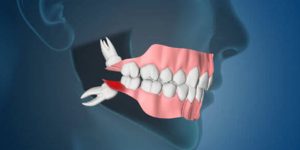
A wisdom tooth or third molar is one of the three molars per quadrant of the human dentition. It is the most posterior of the three. Wisdom teeth generally erupt between the ages of 17 and 25. Most adults have four wisdom teeth, one in each of the four quadrants, but it is possible to have none, fewer, or more, in which case the extras are called supernumerary teeth. Wisdom teeth commonly affect other teeth as they develop, becoming impacted. They are often extracted when or even before this occurs.
Wisdom teeth are vestigial third molars that helped human ancestors to grind plant tissue. It is thought that the skulls of human ancestors had larger jaws with more teeth, which possibly helped to chew foliage to compensate for a lack of ability to efficiently digest the cellulose that makes up a plant cell wall.After the advent of agriculture over 10,000 years ago, soft human diets became the norm, including carbohydrate and high energy foods. Such diets typically result in jaws growing with less forward growth than our paleolithic ancestors and not enough room for the wisdom teeth.
